The short answer
Timeline tracks the build type. A driver-grade mechanical refresh can be done in weeks. A frame-off restoration on a rusty car can take well over a year. Here is a realistic range for each, and the honest reasons a build runs long.
Timeline by build type
Mechanical / driver refresh: 4 to 10 weeks. You are making the car run and drive safely, not tearing it apart. This is the fastest way to start enjoying a classic.
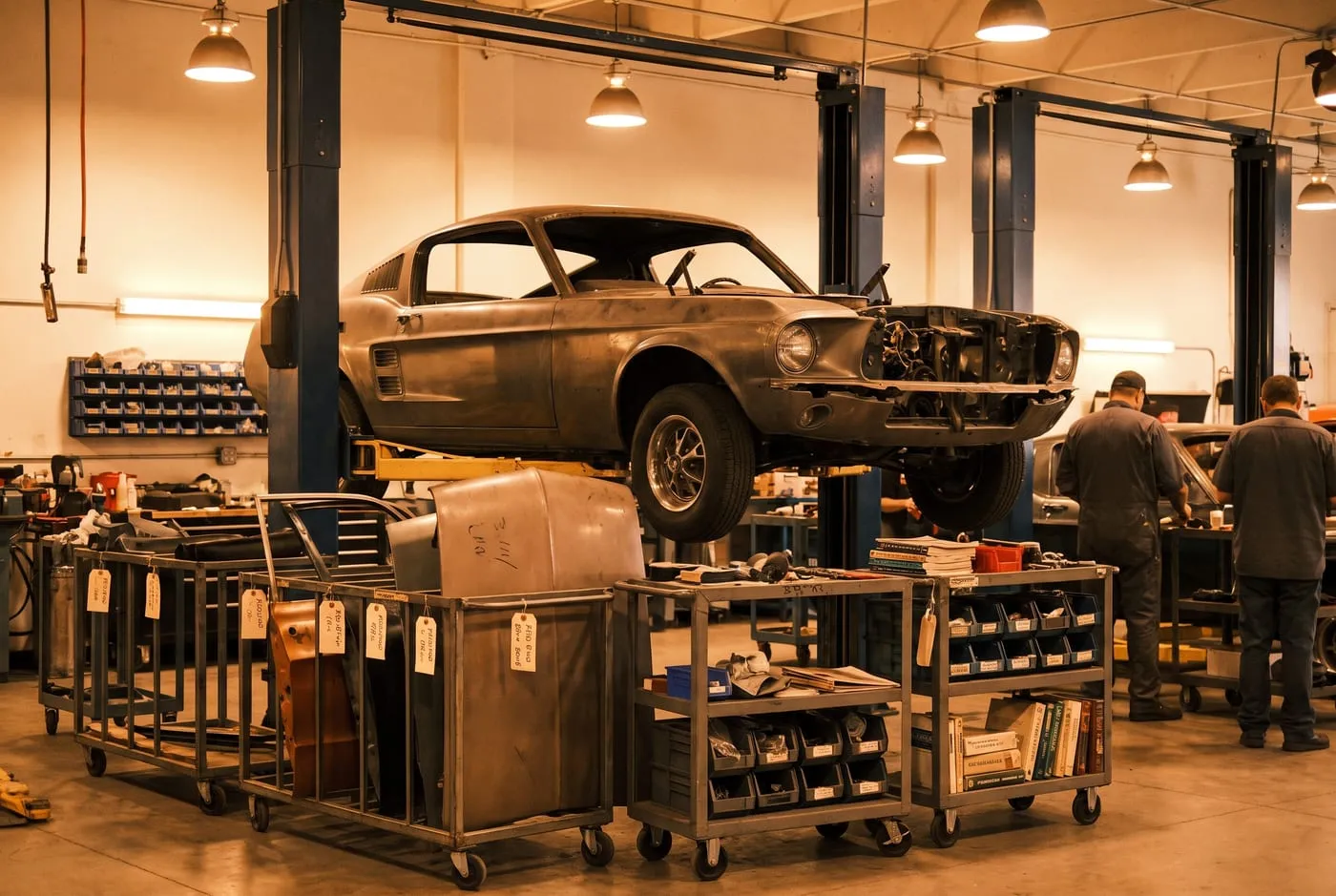
Full restoration: 6 to 12 months. Body, paint, interior, and mechanicals, with the body staying on the chassis. The bodywork and paint stages are the longest part.
Frame-off / concours: 9 to 18 months. The body comes off, every system is rebuilt, and show-grade details take time. The more correct you want the car, the longer the finish work takes.
Restomod: 12 to 24 months. A restoration plus the engineering to integrate modern running gear cleanly. Custom fabrication and tuning add time a stock rebuild does not need.
Why restorations take as long as they do
The work is labor-heavy and it is sequential. You cannot paint until the body is straight, you cannot assemble until the paint has cured, and you cannot chase down a running problem until the drivetrain is in. Many stages simply have to wait for the one before them.
Three things stretch a timeline most often. Hidden rust that is worse than expected once the car is stripped. Parts that are back-ordered or, for rare cars, hard to find at all. And shops that take on more cars than they can actually work on, so your car sits waiting for attention rather than being worked.
How to plan
Ask for a realistic range up front, not a best case. Ask how many active builds the shop is running, so you know your car will actually be worked, not parked. And build a little slack into your own plans, because a real restoration always finds something. A shop that gives you an honest timeline and then communicates as things change is worth more than one that promises a date it cannot hit.