The short answer
A classic Mustang restoration in 2026 runs anywhere from about $10,000 to well over $150,000. That range sounds absurd until you realize it covers everything from a mechanical refresh on a solid driver to a nut-and-bolt frame-off on a rare fastback. The number is not random. It tracks four things: the car’s starting condition, your goal, the parts you choose, and the level of finish.
Here is what each tier actually buys.
The four build tiers
Mechanical / driver-grade: $10,000 to $18,000
The car stays as it is cosmetically. You are making it run, stop, and drive safely and reliably: engine, brakes, suspension, cooling, and the safety items. This is the right tier for a car that already looks decent and just needs to be made trustworthy. It is the fastest way to start enjoying a classic.
Full restoration: $35,000 to $65,000
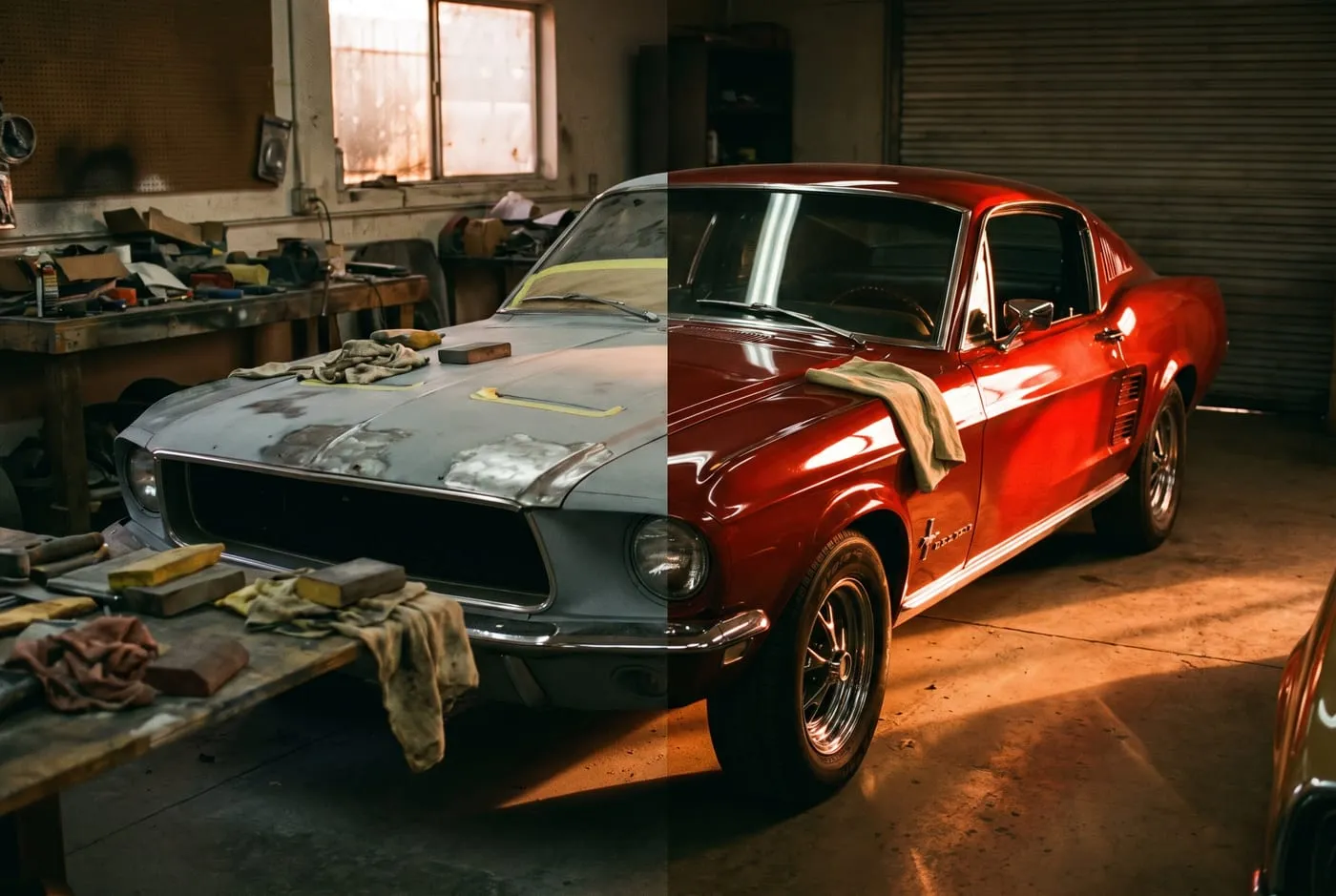
Body, paint, interior, and mechanicals brought up to a better-than-factory standard, with the car’s original character kept. The body stays on the chassis. For most owners of most Mustangs, this tier delivers roughly 90 percent of a frame-off result for meaningfully less money.
Frame-off / concours: $75,000 to $150,000 or more
The body comes off the chassis, every system is rebuilt or replaced, and the fit and finish are show-grade. This is the tier for rare cars, numbers-matching investments, and show cars. It is the most thorough and the most expensive, and on the right car it is the one that protects and grows value.
Restomod: $85,000 to $200,000 or more
Classic body, modern drivetrain, suspension, brakes, and comfort. You are paying for modern running gear and the engineering to integrate it cleanly, on top of the restoration itself. The reward is a classic you can actually drive hard, anywhere.
What moves the number
Hidden rust. The single biggest source of surprise cost. Rust under carpet, inside frame rails, and behind panels can add tens of thousands once a car is stripped. A good shop inspects for it before quoting so it is priced in, not sprung on you.
The car you start with. A solid, complete car costs far less to restore than a rusty, incomplete one. Sometimes paying more for a better starting car saves money overall.
Parts choice and rarity. Correct, date-coded, numbers-matching parts cost more than quality reproductions. On a rare car those correct parts protect value. On a common driver, reproductions are the smart call.
Level of finish. Concours-correct judging standards require hundreds of extra hours on details most people never notice. Beautiful is far cheaper than perfect.
Where the money actually goes
Most people assume the parts are the expensive part. They are not. Labor is, and specifically the bodywork and paint prep. Metal-finishing a body straight and block-sanding it before paint take hundreds of hours, and that time is where the bulk of a quality restoration’s cost lives. It is also why a bargain paint job is a false economy: the prep is the expensive part, and skipping it shows in every reflection.
How to budget without surprises
Decide the goal first, then the tier. Get the car inspected before you accept any number, so hidden rust and missing parts are priced in. Build in a contingency of 10 to 15 percent, because a real restoration always uncovers something. And be honest about which tier fits the car: a frame-off on a common coupe rarely returns its cost, while a driver-grade refresh on that same car gets you enjoying it for a fraction of the price.
If you want a real number for your specific car, that starts with a look at the car and a conversation about what you want it to become.